How do I teach my kids about money at every age?
By Calm Money Kids · · 6 min read
A lot of parents want to teach their kids about money and are not sure what fits their child's age. You can use the same simple system at every age, which is a weekly allowance, four jars that each have a job, and a short money talk once a week. What changes as your child grows is how much money is in the jars and how much your child is in charge of.
What is the best way to teach kids about money at any age?
Kids learn money by doing it again and again, and by watching you. That is why a small weekly habit teaches more than a big talk once a year.
In Calm Money Kids, the allowance is $1 for each year of age, paid every week on Family Money Day. It is never tied to chores, because money and helping are two different lessons.
This matters because your child gets to practice with real money from the start. The app keeps track of each child's jars for you, so you can run the same system for a 5 year old and a 15 year old in one place.
What do the four money jars teach kids?
Every child uses the same four jars at every age, and each jar teaches one idea.
 The Grow jar teaches that money can grow
The Grow jar gets 30 percent of the allowance, and it is not spent while your child is a kid. It teaches patience and shows that money left alone can grow over time.
 The Dream jar teaches saving for a goal
The Dream jar gets 30 percent, and it is for one thing your child picks. A little kid saves for a few weeks, and a teen can save for up to a year.
 The Spend jar teaches making choices
The Spend jar gets 25 percent, and it is your child's own money to use. This is where small mistakes happen, and those mistakes are some of the best lessons.
 The Give jar teaches helping others
The Give jar gets 15 percent, and your child helps choose where it goes. It teaches that even a small amount can help someone else.
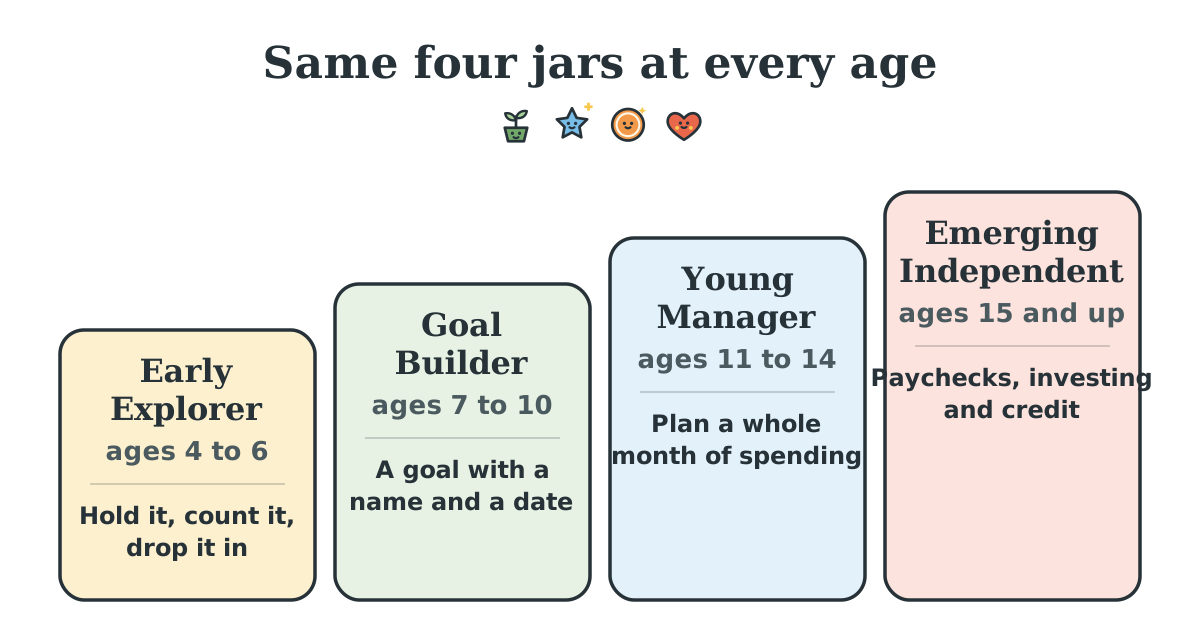
How do you teach kids ages 4 to 6 about money?
At this age the routine is the lesson. Your child will not fully understand saving yet, and that is okay, because filling the jars each week builds the habit.
Little kids learn with their hands, so let them hold the money, count it and drop it in. They can learn that money is traded for things, that it is gone once it is spent, and that waiting can get you something better.
In Calm Money Kids this stage is called Early Explorer. A child is ready to move on when they can name all four jars and say what each one is for.
You can read more about teaching a 4 year old, a 5 year old or a 6 year old.
How do you teach kids ages 7 to 10 about money?
This is the age when a goal can live in your child's head and pull them forward. They can plan ahead now, so a savings goal gets a name and a date.
It is also the main age for teaching needs and wants, comparing prices, and learning that money can be earned. Kids this age learn best from small mistakes they figure out on their own.
In Calm Money Kids this stage is called Goal Builder. The big win here is setting a goal for the Dream jar and reaching it.
You can read more about teaching a 7 year old, an 8 year old, a 9 year old or a 10 year old.
How do you teach kids ages 11 to 14 about money?
At this age your child moves from following the system to running part of it. The allowance still comes every week, but they now plan a whole month of spending.
They are ready to learn that choosing one thing means giving up another, how ads and friends push us to spend, and how a bank account works. They want reasons and not rules, so it helps to ask a question before you give an answer.
In Calm Money Kids this stage is called Young Manager. The big win is running a full month on their own budget without a bailout.
How do you teach teenagers ages 15 and up about money?
This is when you move from making the rules to asking good questions. Many teens start earning money from jobs, so paychecks and taxes become part of real life.
They are ready for investing and compound interest, credit and debt, insurance, and how to spot a scam. A good question to keep coming back to is, "What do you want your money to do for you?"
In Calm Money Kids this stage is called Emerging Independent. The big win is when your teen can explain compound interest back to you.
What happens if you wait to teach your kids about money?
Kids learn about money whether we teach them or not. If nobody shows them, they learn by watching cards get tapped and packages show up at the door.
The mistakes also get more costly with age. Running out of money at 8 costs a few dollars, and running out at 28 can cost a lot more.
How can one family teach kids of different ages about money?
Say you have a 6 year old and a 12 year old, and you are all at the store. Your 6 year old has $1 in the Spend jar and picks one small thing.
Your 12 year old has a month of Spend money planned out and decides to wait. It is the same four jars and the same rules for both kids, and only the size of the choice is different.
That is why one system works for the whole family. In Calm Money Kids, each child has their own profile with their own jars, so nobody has to compare.
What are three ways to start teaching your kids about money this week?
You do not need to set up everything at once. You can start with one small step this week and build from there.
Each of these works for any age from 4 to 18.
- Pick your Family Money Day, and tell your kids which day of the week it will be.
- Set up four jars for each child and label them Grow, Dream, Spend and Give.
- Ask each child what they would like to save for in their Dream jar, and write down what they say.
Common questions about teaching kids about money at every age
What age should I start teaching my child about money?
Calm Money Kids starts at age 4, when a child can hold coins, count a little and take part in a weekly habit.
Should allowance be tied to chores?
In Calm Money Kids it is not. The allowance comes every week no matter what, and helping at home earns Helping Hands points that are traded for privileges and shared experiences.
Do I need a different money system for each child?
No, every child uses the same four jars and the same split. The amount grows by $1 each year, and so does how much your child is in charge of.
Start teaching your kids about money at the age they are now
You have not missed your chance, whether your child is 4 or 14. The same four jars and one short talk each week will meet your child right where they are.
Calm Money Kids sets up the jars for each child and gives you activities that fit their age.